Hey folks,
I'm excited to announce that I will be attempting a transition to video reviews. I have found that what I look for first when looking at a potential new game for my collection, I check the video review section first and then the written reviews and other threads. So, it seems natural that I add my two cents to the pool of already fantastic video reviews. I will be shooting in HD on my Canon 650D, and will still be putting out the same great review structure. I really hope that you all enjoy these reviews, and I hope that this doesn't slow me down too terribly much. That said, though, I'm probably going to have to cut myself back from my promised 1 review a week (which I haven't been doing for near on two months, now) to more like 1 or 2 a month.
What do you guys think? Are you as excited as I am? Stay tuned, I'll start filming the first review this Thursday, and I promise it'll be something good!
James
Tuesday, January 3, 2012

Monday, December 26, 2011
Happy Holidays!
Oh man, with over a month of inactivity I've sure got a lot of apologizing to do!
When you last heard from me I was heading in to finals week here at Portland State. When that finished, I had a weekend of travel, followed by a week of work, which was followed by a week of no board games, and finally the holidays. Needless to say, I was quite busy and have had little time to do much of any gaming. But all is not lost! I should be back to reviewing sometime soon.
Hopefully you all had a great Holiday, I know I did. While not all of my gifts were gaming related, I did get quite a few great games. Eclipse, Mage Knight, Pret-a-Porter and Call of Cthulhu: The LCG just to name a few, and a few pre-orders as well. You can look forward to all that and more coming soon.
I've got my best of 2011 list that I hope to be posting just in time for the New Year, and I might even do a most anticipated list, as well. What do you guys want out of 2012, gaming wise? Is there a particular game you'd like to see? A 'Con to attend? Send me your responses at tabletalkreviews@gmail.com
When you last heard from me I was heading in to finals week here at Portland State. When that finished, I had a weekend of travel, followed by a week of work, which was followed by a week of no board games, and finally the holidays. Needless to say, I was quite busy and have had little time to do much of any gaming. But all is not lost! I should be back to reviewing sometime soon.
Hopefully you all had a great Holiday, I know I did. While not all of my gifts were gaming related, I did get quite a few great games. Eclipse, Mage Knight, Pret-a-Porter and Call of Cthulhu: The LCG just to name a few, and a few pre-orders as well. You can look forward to all that and more coming soon.
I've got my best of 2011 list that I hope to be posting just in time for the New Year, and I might even do a most anticipated list, as well. What do you guys want out of 2012, gaming wise? Is there a particular game you'd like to see? A 'Con to attend? Send me your responses at tabletalkreviews@gmail.com
Saturday, November 19, 2011
Quebec
Quebec is Canadian publisher Le Scorpion Masque's 2011 strategy game. In Quebec players recreate 400 years of history, playing families seeking to build the historic North American city. It is for 2-5 players, and is playable in around 90 minutes. Does Quebec play as beautifully as the city it's based on, or is it just a poor recreation?
Well, the first thing you'll notice with this game is the box; it's large, sturdy and sports some nice artwork. Opening it you'll find a dual-fold sturdy board, 3 sheets of counters to punch out, player pieces in 5 colors (you can play as pink!), 3 rule-books (one for English, one for French, and one for German), and three sets of cards that match the languages. All of the counters are printed on thick card-stock and are finished with linen paper. The colors are vibrant, the ink precise and the artwork is quality. In fact, all of the components are quality; everything feels sturdy and, whats better, looks great.
The game itself is fairly straight forward. It is played over 4 centuries, with each century lasting roughly 5-7 turns. At the start of the game, you randomly place the 44 building tiles on the board. At the beginning of the game, you have one architect and three workers. Each turn you are afforded one action to perform out of the four (three in a family game) actions possible. Even though there are four, you will really only be doing two actions; starting a new building and contributing to an existing building.
 |
| Construction Sites |
As I stated earlier, there are 44 building tiles, each in one of four colors. The colors correspond to zones of the city; Purple for religion, Red for politics, Yellow for economy and Blue for culture. One side depicts the completed building, the other side depicts a "construction site", showing which age it belongs to and three spots for workers. Depending on where the tile is placed, anywhere between 1-3 workers will be needed to contribute to the building.
 |
| Completed Buildings |
When you are starting a new building, you place your architect pawn over the age indicator (the Roman numeral), and receive three workers to use in future turns. Each building belongs to one of four districts of its color which dictates which "additional action" other players get from contributing to the building. Each building type - religion, politics, economy and culture - has its own unique set of additional actions, ranging from gaining victory points to placing workers. The player who owns the building (whose architect pawn is at the site) does not get to use the additional actions, however, but does get to earn points from the building when it's completed. A player decides when the building is completed, but will gain more victory points depending on how many of the 3 available spots is filled. When the building is completed, the player places the workers into the building's corresponding zones.
 |
| The game boards with the five zones: Religious, Political, Economic Cultural and the Citadel |
The age ends when either no buildings are available when a player tries to build one, or a player has no workers in front of him. At the end of each age there is a scoring phase, where the players go from zone to zone and gain points. A player gets one victory point per cube in the zone, but the player with the most cubes in a zone "cascades" half of his cubes rounded down (to a maximum of 5) to the next zone. So if in the Religious zone, player A has 5 workers, player B has 2 and player C has 7 each player gains their respective points, but player C takes 3 (half of 7 rounded down) of his workers and puts them into the next zone. Scoring continues until all zones have been scored, with the final cascading going to that players active workers pool.
So how does the game play? The artwork is great and the components superb, but is it fun? Quebec is, at its core, a simple euro game. It's got some very unique mechanics; the cascade mechanic adds so much to this game, and the balance of additional actions and victory points makes the game strategic through and through. Each turn the player is faced with difficult decisions, but it isn't unforgiving. A smart player can pull them self out of a poor building choice by capitalizing on the available additional actions and vice-versa. Predicting the demand of the additional action corresponding with your building is both difficult and incredibly satisfying. With the addition of Leader cards, combos begin to form.
The game is obviously a labor of love. Everything feels incredibly balanced, well thought out and tight. Early leads balance out, the aggressive player becomes passive and the underdog wins; nothing is guaranteed in this game. Each game is tense, fun and passes by in a flash. If you can't tell I'm in love with this game, which surprised me. Most of the games in my collection are thematic, with a few notable exceptions. I generally don't enjoy the hours I'll spend in a Euro game just to lose, but Quebec is different for some reason. Winning is incredibly rewarding, but damn, losing is still fun.
I can't say enough about this game. If you consider yourself a fan of Euro games, or if you've written them off as a labor, then you need to give Quebec a try. This very well may be my game of the year for 2011.
Monday, November 7, 2011
Kickstarter Roundup
Hey folks,
To make up for the late review this week, I've decided to get you a list of the latest and greatest games on Kickstarter. If you don't know what Kickstarter is, it's a website that offers developers a chance to independently fund their projects. Projects range from movies to businesses, and anything in between. Most important to us here are the games, of course! Games like Alien Frontiers, Eaten By Zombies!, and Eminent Domain have all been made possible by Kickstarter.
Here's a list of what I believe are the best games on Kickstarter. Some are ending soon, some have nearly two months; some are funded, and some could use your help. Go spend some money!


Islandis looks like a modern gem. It's a big box game that blends together the mechanics of some amazing euro games into what looks like a wonderfully original package. It's got worker placement, dice, resource management and more. To help fund this game, go here.


To make up for the late review this week, I've decided to get you a list of the latest and greatest games on Kickstarter. If you don't know what Kickstarter is, it's a website that offers developers a chance to independently fund their projects. Projects range from movies to businesses, and anything in between. Most important to us here are the games, of course! Games like Alien Frontiers, Eaten By Zombies!, and Eminent Domain have all been made possible by Kickstarter.
Here's a list of what I believe are the best games on Kickstarter. Some are ending soon, some have nearly two months; some are funded, and some could use your help. Go spend some money!
D-Day Dice

D-Day Dice is a dice game set in World War Two. Players are Allied soldiers, rolling dice to perform actions on their turn. In an abstract sense, it's a resource management game. The game looks incredibly well produced, and I'm a sucker for dice games. Follow this for more info.
Empires of the Void

Empires of the Void is a 4X game promising several paths to victory and emphasizing theme. Each player chooses a unique race and begins the game. Want politics? Got it. Want tech trees? They're here. How about exploration? You betcha. And conflict, gotta have the conflict right? Of course. Check it out, here.
Islandis: A World of Lucidia Boardgame
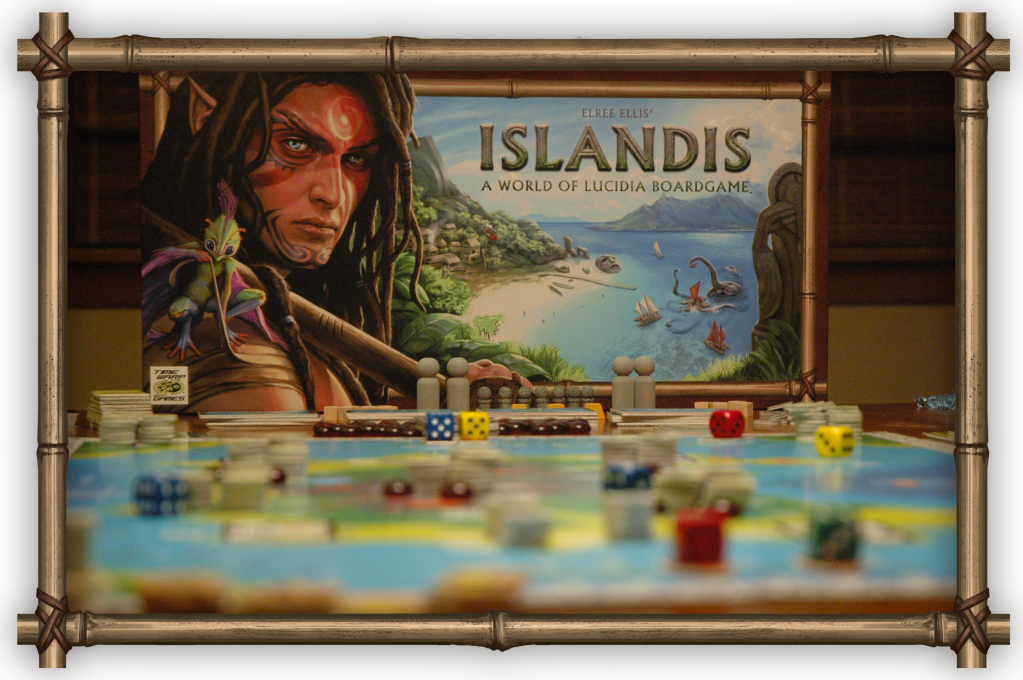
Islandis looks like a modern gem. It's a big box game that blends together the mechanics of some amazing euro games into what looks like a wonderfully original package. It's got worker placement, dice, resource management and more. To help fund this game, go here.
Kings of Air and Steam

Kickstarter veterans Tasty Minstrel Games return after their incredibly succesful Eminent Domain for round two. Kings of Air and Steam is a steampunk route management game involving trains and airships and the delivery of goods. Each player takes control of one of 12 (maybe more depending on funding) characters and begins the game. To get involved, go here.
Miskatonic School for Girls

I love H.P. Lovecraft. He was a revolutionary writer and birthed the modern horror. This game is based in the Cthulhu mythos, but with a fun twist. In Miskatonic School for Girls, each player represents a house (a la Harry Potter) of students, and is trying to attract the best and brightest young girls. At its core, Miskatonic School for Girls is a deckbuilder but with the unique twist that you also build your opponents deck. On your turn, you buy new girls for your house and faculty, who are actually beasts of the Mythos in disguise. Each player's house begins the game with 20 sanity, the last house with any sanity is the winner. For more information, go here.
Sanitarium
Sanitarium is a survival-horror adventure card game (thats a mouthful) set in a sanitarium. The players are trying to find their three Safe Items in order to regain their sanity and escape the terrifying sanitarium. The game is a quick "superfiller" for 1-4 players, and is produced by Asmadi, the producers of Innovation. Want to get a copy? Go here.
Survival Camp

Survival Camp is a card game set in a zombie apocalypse. On a player's turn, the player rolls a die which dictates the action now available to him/her. The ultimate goal is to build four out of the five tasks available to you. Each task requires a certain amount of resources, which can be drawn from the deck or stolen from the other player. Support this innovative new game here.
Zong Shi
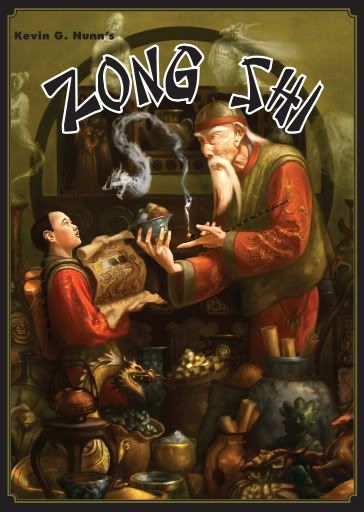
Zong Shi is Gryphon Games' second endeavor on Kickstarter. This marks a trend of bigger companies looking to Kickstarter to help offset costs. Love it or hate it, it's a cheap way to get an awesome looking game. In Zong Shi, players take on the role of aspiring master craftsmen. Through the game, players will be trying to create their masterpieces by collecting the needed resources. Get a copy here.
Confusion: Espionage and Deception in the Cold War
 Confusion: Espionage and Deception in the Cold War is Stronghold Games' 2011 2-player abstract strategy game. As is Stronghold's way, Confusion: Espionage and Deception in the Cold War is a rerelease of the 1992 abstract strategy game Confusion, with upgraded components and a sleek new design. In Confusion, players try to get the top-secret briefcase from the center of the playing board to the opponent's first row. The trick is, you don't know how your pieces move, and must deduce the information through trial and error. So, will you be left you scratching your chin wanting more, or will you just be mind-numbingly confused?
Components
Confusion comes with 26 playing pieces in two different colors, 1 briefcase-piece, 6 variant tokens, 1 game board, a rule book, 2 player books and 3 dry-erase pens. All of the physical pieces used in the game are colored bakelite, giving them a solid, sturdy feel to them. They're also ingeniously created. Each player gets 13 pieces in their color. Each piece has a recession in the center for a smaller piece to slide in. There are 13 pieces that depict the movement unique to that piece, and at the beginning of the game you randomly assign the movement pieces to your opponents pieces, which face away from your opponent. The pieces slide in snugly and comfortably, so you don't have to worry about them popping out mid-game.
Gameplay
The game itself is fairly simple. After you have placed all of the movement pieces in your opponent's playing pieces facing you, you can begin. On your turn you only do one thing: attempt to move a piece. The other player will then look at the piece and tell you whether or not you can move in the desired way. You cannot see how your piece is allowed to move, but your opponent can. After your opponent tells you yes or no on your movement, you take your dry erase pen and your player book, and you can (hopefully) eliminate some of the possible movement types. Eventually, you will start deducting which pieces can move in which ways and you can begin formulating a strategy.
To win, you must get take the briefcase from the center of the board to the opponent's first row. If you ever move into a space that is occupied by an opposing player's piece, you capture that piece a la Checkers. Careful planning, mental fortitude and a bit of luck will decide the victor.
Conclusion
Confusion truly is a great game, but it's not without its flaws. The rulebook needs some work, in my opinion. The rules are 6 pages from introduction to variants. It's nice that it is so succinct and short but it is, at times, vague and confusing. For example, some movement pieces have a lock symbol on them. The rulebook explains this rather poorly, saying that pieces with this symbol "are not always able to return to their previous square next turn depending on what movement you select for them", and that the symbol is for reference only. Inquiry on this reveals that the lock symbol merely means that, because of the nature of the movement type, sometimes the piece cannot move back into its previous position. For example, if a piece can move x number of spaces straight forwards and diagonal backwards, then if it moves diagonal it cannot return to the previous space because it can only move straight forward. Why put a special symbol on the piece for something so obvious?
Additionally, the rulebook's explanation of how to win is one sentence long on the first page under the description of gameplay and contents. I may be alone on this, but I would expect to find how to win the game after the rules on how to play the game, or at least within the actual rules of the game.
To add to the confusion, the only diagram in the rulebook is for the initial piece placement during set up and there are no examples to site. The board is an 11x11 grid, with the first and last columns being considerably darker and containing a nuclear symbol. This is only used in a variant, but is so pronounced that it creates questions during gameplay. The explanation is found on the last page of the rulebook in the variants section. Again, I may be alone on this, but I don't look for explanations of the anatomy of the board in the variants sections.
All of that may seem nit-picky, but it's because this game reeks of quality. Everything about this game - from the art, to the components, to the gameplay - shows just how much work was put in to creating the best possible game that Stronghold could, but it has these minor oversights that nag at me. The flaws are not enough to detract from your enjoyment of the game, and are purely superficial. All in all, Confusion: Espionage and Deception in the Cold War stands as an amazingly well-produced 2-player game with near limitless replayability.
For more information on Confusion: Espionage and Deception in the Cold War, check out its entry on BoardGameGeek, and for information on where to purchase this great game and others, check out Stronghold Games' website.
Tuesday, November 1, 2011
Top 5 Horror Board Games
Halloween is my favorite holiday for several reasons. For one, I love Fall. Ever since moving to Portland, it has become one of my favorite seasons. Seeing the leaves change from green to red and eventually fall from their high homes truly is beautiful. Secondly, I love horror. Some may call Halloween a child's holiday, but I love the feeling that October brings. The days are getting shorter, the trees are shrinking away into skeletal forms of there former glory, and the temperature is slowly dropping. All of it congeals into a nearly palpable air of horror.


In my opinion, being scared is the only time a person truly acts like themselves; when you're afraid, you drop the social training thats been ingrained in our subconscious and you let your true colors show. Some people run, some people cower, and some people get angry, redoubled by the though of certain death. It's no surprise, then, that I love horror fiction, films and media.
Nothing says Halloween more than scary board games, so here's my list of the top 5 horror board games. This is purely my opinion, and it is solidly based in the things I find scary or stimulating.

5. Betrayal at House on the Hill

Haunted houses: Not only are they synonymous with Halloween, but they're also incredibly perverse in horror stories. Betrayal at House on the Hill, while suffering from a few problems, tackles the haunted house setting better than any game. Exploring the strange rooms of the house will result in the revelation of the haunting. The haunts are clever, challenging, and, most importantly, scary.
4. Arkham Horror

I love H.P. Lovecraft. While I am a late-comer to the Cthulhu mythos, discovering it only within the last few years, I've felt right at home reading the stories. Arkham Horror is not a terrifying game, but I feel the same desperate confusion that Lovecraft's characters feel when confronting the beings of the mythos.
3. The Walking Dead: The Board Game

What would you do to survive a zombie apocalypse? Would you band together and try to start a new world, or would you try to find an answer to the question that you need answered? The Walking Dead: The Board Game explores the human condition just as the comic did, and it's just as satisfying.
2. Last Night on Earth

What list would be complete without this game? While, on the surface, this may seem overkill following The Walking Dead, this is a very different game. Last Night on Earth is the game that epitomizes the zombie genre. The confusion, the excitement and the terror of it all is encompassed in this box. While The Walking Dead is all about the human element, Last Night on Earth is all about survival.
1. Panic Station
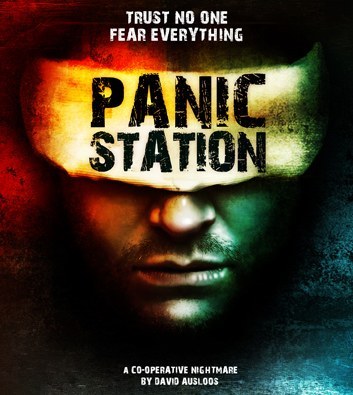
Paranoia is a huge element of horror. Who can you trust? Where is safe? What was that noise in the alleyway? If you've seen The Thing, then you know how paranoia effects the human brain. Panic Station creates that same sort of paranoia, with characters attempting to take care of an alien hive while one is actually infected.
For more information on all games listed above, check Board Game Geek.
Monday, October 31, 2011
King of Tokyo

In King of Tokyo the players play familiar monsters on a rampage through Tokyo, dealing damage to each other, the city and its inhabitants as they go. The first player to accrue 20 victory points wins! Each of the six monsters in the game is identical aside from aesthetic differences, all monsters start the game with 10 hit points, 0 victory points and 0 energy.
The board depicts Tokyo in a state of emergency, with one circled area labeled "Tokyo" and another labeled "Tokyo Bay" which is only used in 5- or 6-player games. These two locations are the most straightforward way to get victory points. When a player enters Tokyo, they gain one victory point. For every turn they start in Tokyo, they gain two additional victory points.
 |
| Components of the game: 1 game board, 6 monsters, 6 basic dice, 2 advanced dice, counters, energy cubes, and cards |
On a players turn, he or she will roll 6 oversized custom dice, depicting the various actions that they can perform. In a Yahtzee-esque manner, each player is allowed to reroll any or all of the dice two times. After your second reroll, your monster receives or performs the depicted actions.
The game has four basic actions:
- Attack, shown by the four-fingered hand
- Heal, shown by the heart
- Energize, shown by the lightning bolt
- Gain Victory Points, shown by the numbers.
 |
| Tokyo and Tokyo Bay |
Tokyo is a pretty cool place. Its got great food, cool nightlife, and it gives you victory points for being there. It also modifies your results slightly. If you roll Attack dice while in Tokyo, all your damage goes to those outside Tokyo and vice versa. You also cannot use your Heal dice action while in Tokyo. As you can see, Tokyo is also the most dangerous place to be. In order to leave Tokyo, all one has to do is survive an attack. After the attack, that player can swap places with the attacking monster. Success comes to those that can properly balance being in and out of Tokyo while juggling dice rolls.
 |
King of Tokyo is a simple game at its heart. It's a roll-and-play game that has heavy interaction, and some might have a problem with that. It has been called a family game, both here and other places, but I think it's more than that. I've played this a dozen or so times, and each game feels more strategic and tense than the last. The artwork in the game is truly beautiful, the components are solid and the dice are so beefy and satisfying, it's hard to say anything bad about the quality of this game. What really sets this game apart from other games in this genre are the cards. When you add the variable powers, gains and losses that the cards present you truly get a unique experience. King of Tokyo is an incredibly rewarding game that people should not pass up.
For more information, check out King of Tokyo on Board Game Geek here.
Subscribe to:
Posts (Atom)